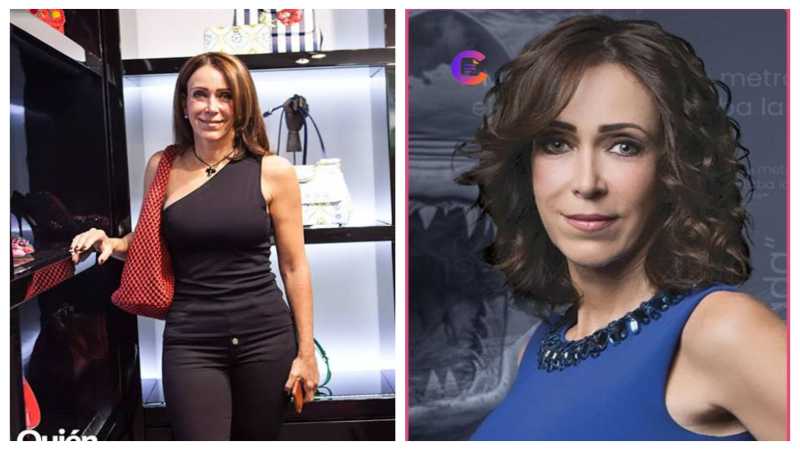
The global business world has produced remarkable women who have transformed industries, challenged traditional expectations, and inspired future generations of leaders. Among them, María Asunción Aramburuzabala and Susan Wojcicki stand out for their achievements in two very different fields. Aramburuzabala built an influential investment career rooted in Mexico’s industrial and financial sectors, while Wojcicki played a significant role in the development of the modern internet through her leadership at Google and YouTube.
Although their professional journeys followed different paths, both women demonstrated strategic thinking, determination, and the ability to recognize opportunities before they became obvious to others. Their stories also illustrate how women can influence major business decisions, lead international organizations, and create lasting professional legacies.
Understanding their backgrounds, accomplishments, and leadership approaches provides valuable lessons for entrepreneurs, investors, technology professionals, and aspiring business leaders.
Who Is María Asunción Aramburuzabala?
María Asunción Aramburuzabala Larregui is a Mexican businesswoman and investor widely recognized for her wealth and influence in Latin American business. Born on May 2, 1963, she comes from a family associated with Mexico’s brewing industry. Over time, she transformed that family business background into a broader investment career.
Aramburuzabala is best known for leading Tresalia Capital, an investment firm based in Mexico City. Through the company, she expanded her interests beyond brewing into sectors such as technology, telecommunications, infrastructure, and real estate.
Her career demonstrates how family wealth can become a foundation for building a diversified investment portfolio. Rather than relying exclusively on one industry, she pursued opportunities across multiple sectors and developed relationships with established businesses.
Early Life and Family Background
Aramburuzabala grew up in a family with deep connections to Mexican industry. Her grandfather, Félix Aramburuzabala, co-founded Grupo Modelo in 1925. The company later became one of Mexico’s best-known brewing businesses, producing internationally recognized beer brands, including Corona and Modelo.
This family connection provided an introduction to the complexities of business ownership, corporate governance, and long-term investment. However, inheriting a business interest does not automatically guarantee successful leadership.
In 1995, her father, Pablo Aramburuzabala, died from cancer. His death created uncertainty surrounding the family’s ownership position in Grupo Modelo. María, together with her mother and sister, worked to protect the family’s interests and maintain its influence in the company.
This period became an important turning point in her professional life. She stepped into a more prominent leadership role and helped establish a foundation for the family’s future investment strategy.
The Creation of Tresalia Capital
In 1996, María and her family established Tresalia Capital. The name refers to the idea of three allies, reflecting the partnership among the three women involved in protecting and managing the family’s interests.
The firm gave Aramburuzabala a platform to pursue investment opportunities outside the brewing industry. Consequently, she could reduce dependence on a single business sector while exploring companies with different growth prospects.
Tresalia Capital’s approach reflects several important investment principles:
- Diversification: Investing across industries can reduce dependence on one source of income or economic activity.
- Long-term thinking: Investors can pursue sustainable growth instead of focusing exclusively on immediate returns.
- Strategic partnerships: Relationships with established companies can create opportunities for expansion and collaboration.
- Risk management: Evaluating business fundamentals helps investors make more informed decisions.
- Corporate governance: Effective oversight supports accountability and responsible business management.
Through this investment strategy, Aramburuzabala developed a reputation as a prominent figure in Mexico’s financial and corporate communities.
The Grupo Modelo Transaction
One of the most significant events associated with Aramburuzabala’s business career was the sale of the family’s remaining interest in Grupo Modelo to Anheuser-Busch InBev.
In 2013, the brewing giant completed a transaction valued at approximately $20.1 billion for the remaining shares it did not already own. The deal followed an earlier acquisition of a controlling interest in Grupo Modelo and represented a major development in the international brewing industry.
For the Aramburuzabala family, the transaction marked a transition from a concentrated ownership position in a major brewing business toward a broader investment strategy.
The proceeds and the family’s earlier business interests helped support continued investment and diversification. More broadly, the transaction demonstrated how a family-owned company can become part of a much larger international corporate structure.
The deal also illustrates the importance of timing, negotiation, and strategic planning when investors consider selling a major business interest.
Leadership and Corporate Influence
Aramburuzabala has also contributed to the representation of women in Mexican corporate leadership. In 2003, she became the first woman to serve on the board of directors of the Mexican Stock Exchange, an important milestone in a traditionally male-dominated business environment.
Board membership carries responsibilities beyond financial oversight. Directors help evaluate company strategy, monitor risk, review executive performance, and protect shareholder interests.
Her position demonstrated that women could participate in influential financial institutions and contribute to decisions affecting broader business markets.
Additionally, her involvement with international companies and investment opportunities has helped establish her reputation beyond Mexico.
Net Worth and Philanthropic Activities
Aramburuzabala is frequently described as one of the wealthiest women in Latin America. Public estimates have placed her net worth around $9.1 billion to $9.3 billion, although these figures can change as the values of private investments, public holdings, and other assets fluctuate.
It is important to understand that billionaire wealth estimates do not necessarily represent cash available for immediate spending. Instead, they generally reflect the estimated value of business interests, investments, and other assets after accounting for relevant liabilities.
Beyond business, Aramburuzabala has been associated with philanthropic initiatives connected to environmental protection and community development, including activities linked to Fundación Grupo Modelo.
These initiatives highlight how business resources and corporate networks can support projects beyond commercial operations. Nevertheless, evaluating philanthropic impact requires examining the specific programs, funding, and measurable outcomes involved.
Who Was Susan Wojcicki?
Susan Diane Wojcicki was an American technology executive who played an important role in Google’s growth and the development of YouTube. Born on July 5, 1968, she became one of the most influential women in Silicon Valley through her work in digital advertising, product strategy, and online video.
Wojcicki joined Google in 1999, when the company was still a young startup. During her career, she helped develop its advertising business and later led YouTube through a period of substantial international expansion.
She served as YouTube’s chief executive officer from 2014 until 2023. Wojcicki died on August 9, 2024, at the age of 56, after living with non-small cell lung cancer.
Her professional legacy remains closely connected to the evolution of online search, digital marketing, video entertainment, and the creator economy.
Early Life and Education
Wojcicki grew up in California in an academically oriented family. Her father, Stanley Wojcicki, was a physics professor at Stanford University, while her mother, Esther Wojcicki, worked as an educator and journalist.
She attended Harvard University, where she earned a degree in history and literature. She subsequently pursued graduate studies in economics at the University of California, Santa Cruz, and earned an MBA from the University of California, Los Angeles.
Her educational background combined analytical thinking with an understanding of communication and human behavior. These skills later became valuable in technology, where companies must balance technical development with user needs and commercial objectives.
Although her career eventually centered on technology, her path demonstrates that successful leaders do not always begin with a narrowly defined technical education.
The Famous Garage and Google’s Early History
One of the best-known details of Wojcicki’s story involves her garage in Menlo Park, California.
In 1998, she rented the garage to Larry Page and Sergey Brin as they worked to establish Google. At the time, the company was an emerging search-engine project with a much smaller footprint than the global technology business it would eventually become.
Wojcicki joined Google in 1999 as its 16th employee and its first marketing manager.
Her decision to join a young startup proved significant. Rather than entering an established technology corporation, she helped build business processes and marketing strategies while the company was still developing its identity.
This experience placed her close to the early decisions that shaped Google’s commercial direction.
Building Google’s Advertising Business
Google’s search technology attracted users by helping them find information quickly. However, the company also needed a sustainable business model that could support infrastructure, research, and international expansion.
Wojcicki played a key role in developing Google’s advertising operations.
She contributed to the growth of AdWords, Google’s advertising platform for businesses, which was later renamed Google Ads. The platform allowed advertisers to reach audiences through relevant search results and other Google services.
She also helped oversee the development of AdSense, which enabled participating websites to earn money by displaying advertising. This model created a commercial relationship between advertisers, publishers, and online audiences.
In addition, Google Analytics became an important tool for measuring website traffic and understanding visitor behavior.
Together, these products helped establish a digital advertising ecosystem that connected businesses with customers while giving publishers opportunities to monetize online content.
Wojcicki also supported Google’s acquisition of DoubleClick, a digital advertising technology company. Google completed the approximately $3.1 billion acquisition in 2008, strengthening its advertising technology capabilities.
These developments illustrate how digital platforms can create revenue by connecting user demand, advertiser objectives, and measurable results.
The YouTube Acquisition
Wojcicki recognized the growing importance of online video as internet connections improved and audiences increasingly watched content on digital platforms.
YouTube had emerged as a popular destination for sharing and watching videos. Wojcicki supported Google’s decision to acquire the company, which Google announced in 2006.
Google completed the acquisition in November 2006 for approximately $1.65 billion in stock.
The purchase gave Google a major position in online video and provided YouTube with access to Google’s technology, infrastructure, and commercial resources.
At the time, the long-term financial potential of user-generated video was still developing. Nevertheless, the acquisition reflected a strategic understanding that online video could become a major part of internet usage.
As audiences began using YouTube for entertainment, education, music, commentary, and news, the platform developed into an important part of the digital media landscape.
Leading YouTube as CEO
In February 2014, Wojcicki became YouTube’s CEO. She led the company through a period of considerable growth and change.
During her tenure, YouTube expanded its advertising business, strengthened its relationships with creators, and developed additional subscription services. The platform also invested in tools and programs designed to help creators reach audiences and earn revenue.
YouTube’s creator ecosystem became particularly important. Individuals, production companies, educators, musicians, and other organizations could distribute content to global audiences without relying exclusively on traditional broadcasters.
However, the platform’s expansion also brought challenges. YouTube had to address copyright disputes, misinformation, harmful content, advertiser concerns, and questions about how recommendation systems influence viewers.
Wojcicki’s leadership therefore involved balancing commercial growth with responsibilities toward users, creators, advertisers, and society.
She stepped down as CEO in February 2023 and moved into an advisory role at Google and Alphabet.
Personal Life and Lasting Legacy
Wojcicki was also a mother of five children and often spoke about the challenges of balancing professional responsibilities with family life.
Her death in August 2024 prompted tributes from colleagues, technology leaders, and people who had worked with her throughout her career.
Her influence extended beyond her executive titles. She helped shape the business models that allow digital services to generate revenue, support publishers, and provide opportunities for creators.
Her career also demonstrated the importance of combining commercial judgment with an understanding of how people use technology.
Comparing Their Business Careers
The professional stories of these two women reveal both similarities and differences.
Although their industries were distinct, their careers show how strategic decisions can influence large organizations and create opportunities for long-term growth.
| Business area | María Asunción Aramburuzabala | Susan Wojcicki |
|---|---|---|
| Primary field | Investment and corporate finance | Technology and digital media |
| Main organization | Tresalia Capital | Google and YouTube |
| Professional foundation | Family business ownership and investment | Early-stage technology leadership |
| Major achievement | Diversifying family wealth and investment interests | Expanding digital advertising and online video |
| Strategic focus | Portfolio diversification and corporate investment | Product development, advertising, and platform growth |
| Broader influence | Mexican business and international investment | Global internet culture and the creator economy |
Different Paths to Success
Aramburuzabala’s career grew from a family business legacy. She helped protect the family’s position in Grupo Modelo before developing a wider investment portfolio through Tresalia Capital.
Wojcicki, on the other hand, entered a young technology company and helped shape its advertising operations before taking leadership of YouTube.
One focused on capital allocation, investment ownership, and corporate relationships. The other concentrated on technology platforms, advertising systems, and digital audiences.
Despite these differences, both women recognized that sustainable success requires more than maintaining existing operations. Leaders must evaluate new opportunities, understand changing markets, and make decisions that support future growth.
What Entrepreneurs Can Learn From Their Stories
The experiences of Aramburuzabala and Wojcicki provide several useful lessons for people building businesses.
1. Recognize Opportunities Early
Wojcicki understood the commercial potential of online video while the market was still developing. Aramburuzabala recognized the value of expanding investments beyond a traditional family business.
Entrepreneurs can apply this principle by studying customer needs, observing emerging industries, and testing promising ideas before committing substantial resources.
However, early recognition alone does not guarantee success. Business leaders must also assess risks, competition, and the resources required to execute their plans.
2. Diversify Strategically
Aramburuzabala’s investment career demonstrates the value of considering opportunities across multiple sectors.
For business owners, diversification can reduce dependence on a single product, customer, or revenue source. Nevertheless, expansion should follow careful research rather than the assumption that every growing industry offers a good investment.
3. Build Sustainable Revenue Models
Wojcicki’s work at Google and YouTube highlights the importance of developing revenue systems that support long-term operations.
A business may attract substantial attention but still struggle if it cannot generate enough income to cover its costs.
Therefore, entrepreneurs should identify who will pay for their products or services, what customers value, and how the business can remain financially sustainable.
4. Adapt to Changing Markets
Technology, consumer preferences, and economic conditions change over time. Successful leaders regularly reassess their strategies rather than assuming that previous results will continue indefinitely.
Aramburuzabala’s move toward diversified investments and YouTube’s development of advertising and subscription services illustrate different approaches to adapting to market opportunities.
5. Develop Strong Leadership Skills
Both women worked in environments that required complex decisions, collaboration, and long-term planning.
Aspiring leaders can strengthen these skills by learning how to evaluate evidence, communicate clearly, manage uncertainty, and understand the interests of employees, customers, partners, and investors.
The Broader Significance of Their Legacies
The professional achievements of these women also matter because they expanded the visibility of women in influential business positions.
Aramburuzabala helped demonstrate that women could lead major investment operations and participate in important corporate institutions in Mexico.
Wojcicki became one of the most prominent women in global technology, helping lead products used by billions of people around the world.
Their experiences also show that leadership can emerge through different routes. Some executives develop their careers within established family businesses, while others join startups and help them grow into international companies.
Neither path guarantees success. Both require judgment, adaptability, resilience, and the ability to make decisions under uncertainty.
Furthermore, their stories encourage a broader understanding of business achievement. Financial performance and organizational growth matter, but so do innovation, responsible governance, access to opportunity, and the long-term effects of business decisions.
Frequently Asked Questions
1. Who is María Asunción Aramburuzabala?
María Asunción Aramburuzabala is a Mexican billionaire businesswoman and investor. She leads Tresalia Capital and is known for her family’s historical connection to Grupo Modelo and her investments across multiple industries.
2. Who was Susan Wojcicki?
Susan Wojcicki was an American technology executive who joined Google in 1999 and served as YouTube’s CEO from 2014 to 2023. She contributed to the growth of Google’s advertising business and helped guide YouTube’s expansion.
3. How did María Asunción Aramburuzabala build her wealth?
Her wealth is associated with her family’s ownership interests in Grupo Modelo, the sale of those interests, and subsequent investments through Tresalia Capital. Exact wealth estimates vary over time.
4. What was Susan Wojcicki’s role in Google’s growth?
Wojcicki helped develop Google’s advertising business and contributed to important strategic decisions, including the acquisition of YouTube. Her work supported the company’s ability to generate revenue and expand its digital services.
5. Did Susan Wojcicki own YouTube?
No. YouTube became part of Google following its acquisition in 2006. Wojcicki later served as the platform’s CEO, leading its operations rather than owning the company personally.
6. When did Susan Wojcicki die?
Susan Wojcicki died on August 9, 2024, at the age of 56, after living with non-small cell lung cancer.
7. What can entrepreneurs learn from these business leaders?
Entrepreneurs can learn to identify opportunities, diversify thoughtfully, develop sustainable revenue models, adapt to changing markets, and make strategic decisions based on long-term objectives.
Conclusion
The stories of María Asunción Aramburuzabala and Susan Wojcicki demonstrate how different forms of leadership can influence industries and shape business history. Aramburuzabala transformed a family business foundation into a diversified investment career, while Wojcicki helped develop the advertising systems and video platform that became central to the modern internet.
Their careers offer valuable lessons about recognizing opportunities, managing resources, adapting to change, and building organizations that can grow over time. They also highlight the important contributions women have made to investment, technology, and corporate leadership.
Ultimately, their legacies extend beyond wealth or executive titles. They show how informed decisions, strategic thinking, and a willingness to embrace new opportunities can influence businesses, create economic value, and inspire future generations of leaders. See more